
The Lillian Project
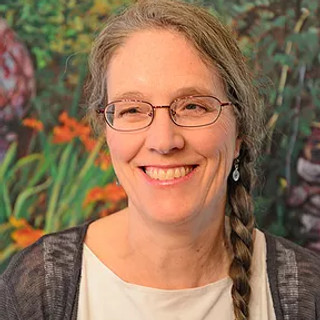

In 2024, I discovered that my great-grandmother Lillian Bedichek was a prolific writer, researcher, thinker and ponderer. At some time in my early adulthood, I learned that she had published a Spanish Language textbook utilized by the Austin public schools and that her retelling of the Persephone myth explaining the seasons had been published in a children's magazine. But after inheriting a treasure trove of her unpublished works from my aunt, a whole new side of Lillian has come to light.
Lillian wrote poetry, several one-act plays and some twenty-odd short stories. Most of her stories and plays seem inspired by life events and experiences -- stories of real people, rather than fantastical tales. Hand-written notes indicate she submitted several stories to periodicals, such as Ladies World, Woman's Home Companion, McDall's Magazine, Harper's Monthly, to name a few. I have found no evidence of these plays or short stories ever being published.
Beyond the plays and stories, perhaps her most ambitious (and unfinished) project was a memoir of her mother, Virginia Lee Greer -- a loving tribute. Lillian adored both her parents. The death of her father in a buggy accident at the age of 48 -- just before Lillian's 22nd birthday -- weighed on her in life. Her mother was suddenly a single parent with four young children at home. "Mamma Jennie's" fortitude and ingenuity surely inspired Lillian. She was a force to be reckoned with and the outpouring of love and admiration upon her death demonstrated her respected place in the Waco and Baylor communities.
I have pages and pages of versions and notebooks full of historical context and background research. The sheer volume of Lillian's research is staggering. It seems she wanted to tell her mother's (and to some extent, father's) story set within a rich historical sketch of Waco and Baylor University, as well. But she didn't stop there. She saw her mother as a product of her heritage and delved into Virginia's mother's story, as well -- another woman who survived her husband by decades without remarrying. The story of Sarah Elizabeth Harwell Lee and her ancestors seems to have developed into its own adjacent project, perhaps with a working title of Generations.
Lillian was neck-deep in genealogical research that seemed to be leading to a truly rich -- almost Michener-esque -- story covering several generations. Her mother's family's story is one of generations of upper-class white enslavers, beginning in 1700s Charleston, eventually becoming part of the pre-Civil War westward expansion from depleted South Carolinian lands to the fertile lands of Alabama and Louisiana. Lillian's parents' post-war migration followed job prospects for her educator father, capitalizing on the expansion of higher education across Louisiana and Texas.
Lillian's knowledge, through family stories from people who lived during slavery and "Reconstruction," is priceless. She named names of the enslaved -- information that is often impossible to find in remaining records. She described scenes, house interiors, relationships, etc. She created dialogue -- my uncle said she intentionally chose the format of historical fiction so she could add dialogue to bring the story to life.
Lillian's own story has a interesting arc -- the granddaughter of enslavers and white supremacists who eventually helped found the Maternal Health Clinic in Austin, Texas to "make available to underprivileged mothers the same medical care and advice in the safe prevention of undesirable pregnancies as is available to all persons who can afford the services of a private physician," (Austin American Statesman, Oct. 6, 1938, pg. 1), which is today's Planned Parenthood of Greater Texas. The more I learn, the more interesting it gets.

A Transcendant Experience
I visited the St. Landry Parish courthouse to learn more about Lillian's grandparents' sugar cane plantation near Opelousas. The parish has great records and I was able to pour over original documents of land transfers -- and even a prenuptial agreement my great-great-great grandmother, Sallie Harwell, required her betrothed, John Bachman Lee, to sign. She brought generational wealth, land and enslaved people, to the marriage that she wanted to continue to control. This "marriage settlement" as they were called were mostly an instrument used by women from wealthy backgrounds.
As I was taking photos and making notes, I realized these were the exact documents Lillian had reviewed -- held in her hands -- while doing her own research. It was a moment I'll never forget. The connection through time and space was surreal. As I bent over the documents, I felt Lillian's presence -- bent over, thumbing through the same pages decades before. It was a connection that has only gotten stronger as I sit in my study sifting through her handwritten notebooks full of thoughts, reflections, dream journals, ideas for stories, lists of birds and plants, and notes on the natural landscape of the Bayou Teche country where the Lee's plantation stood.
Picking up the Pen (actually, clicking on the keyboard)
Now, here I am with a desire to publish these works in the state she left them, and add to them some of her own story. I want the world to know Lillian as I am coming to know her. She was a deep thinker. She was observant. She was creative. She was intelligent. She had deep convictions of social justice that she acted upon. As her granddaughter (my aunt) described, and is clear from reading family letters, Lillian was at once stern and loving. By reading her thoughts, reflections, research notes, and her finished and unfinished pieces, she is jumping out of the photos and becoming my companion on this journey -- The Lillian Project.


Wonderful post.
This is very nice. I am impressed by your feeling of close connection with her, She was my grandmother and I liked her very much as well.
Wow, I didn't know that Grandma Bedichek was so prolific.
What an interesting woman!